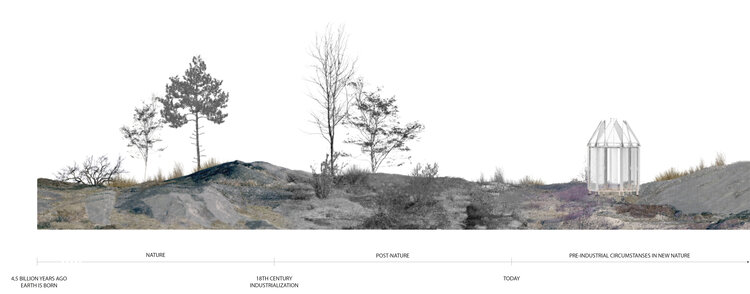
Constructing the new nature “Nature, in the common sense, refers to essences unchanged by man; space, the air, the river, the leaf.” These words by nineteenth-century philosopher Ralph Waldo Emerson define nature as that which exists beyond human interference. Yet this notion has become obsolete. Since the industrial revolution—often marked by Thomas Newcomen’s 1712 coal-fired steam pump—human activity has irreversibly altered every ecological process. Climate change, as both symptom and consequence, signals the disappearance of nature as Emerson conceived it. We inhabit a post-nature world in which all systems bear the trace of human presence.
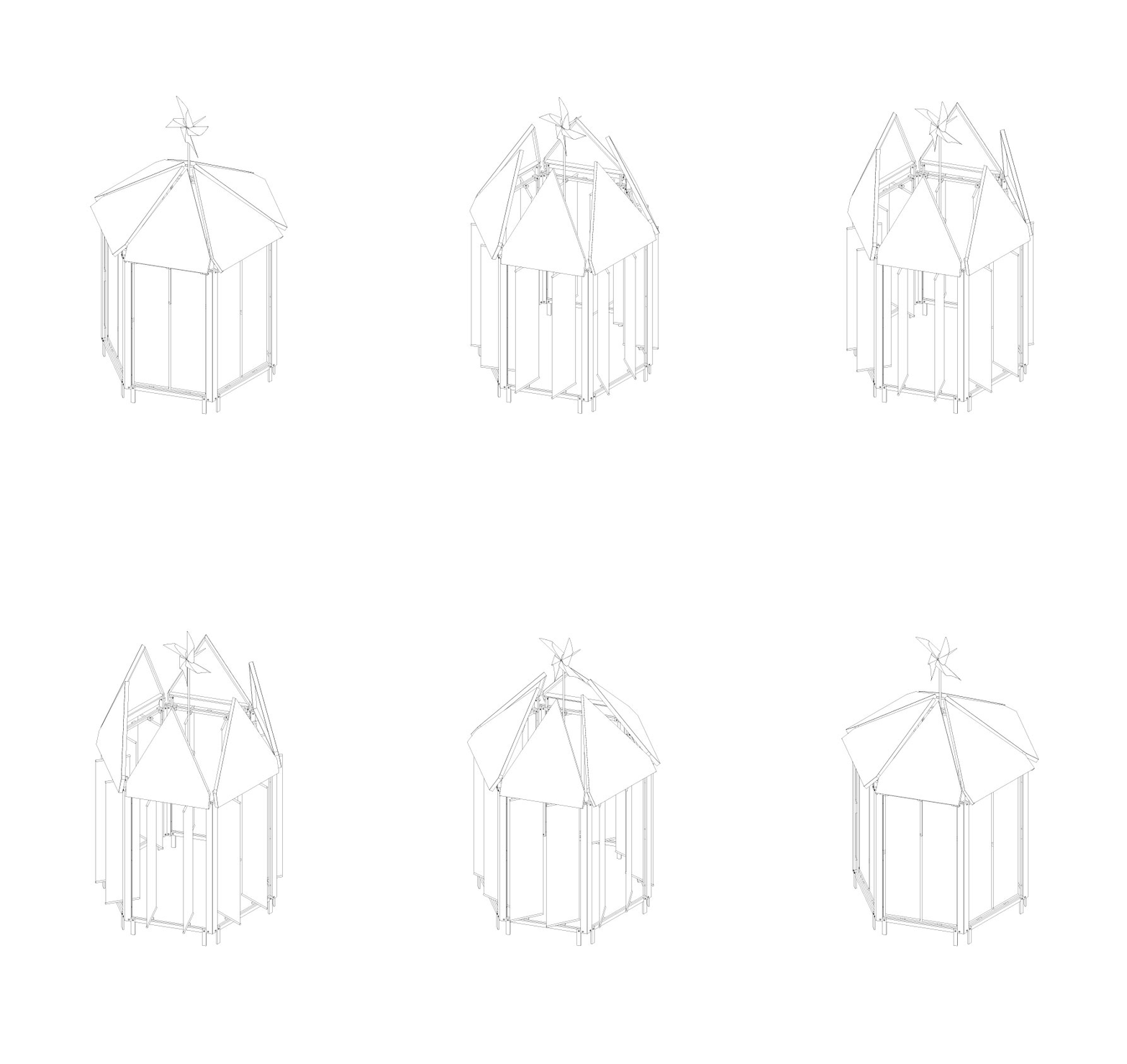
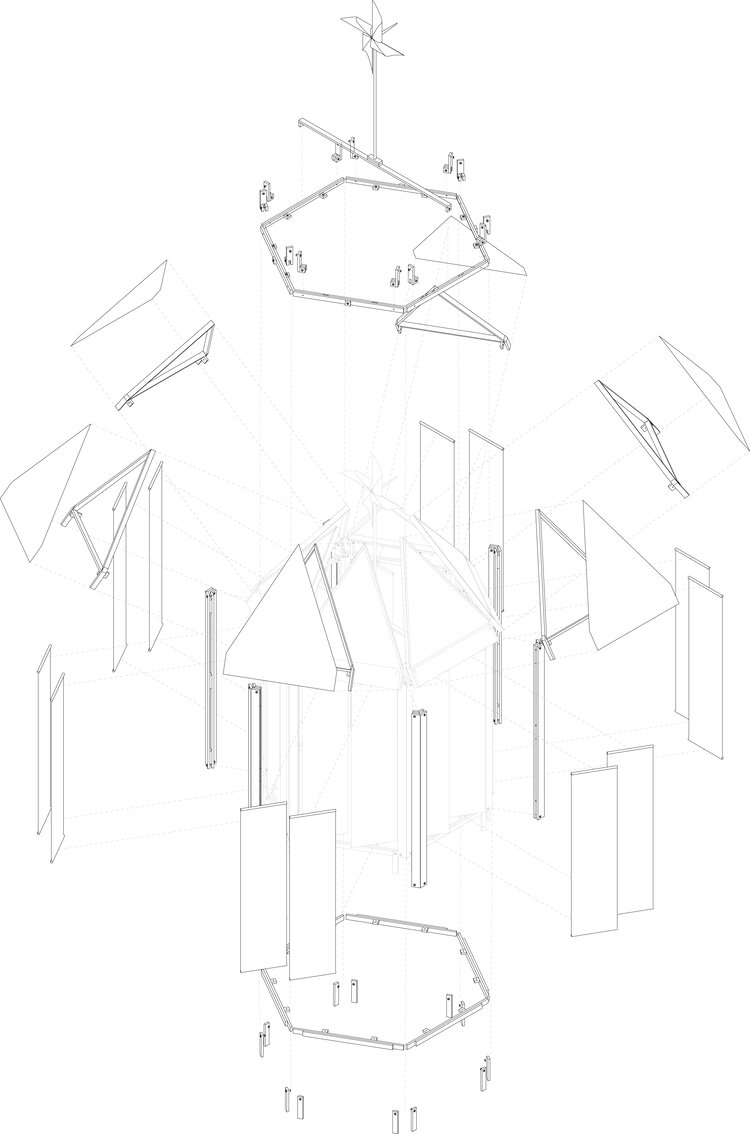
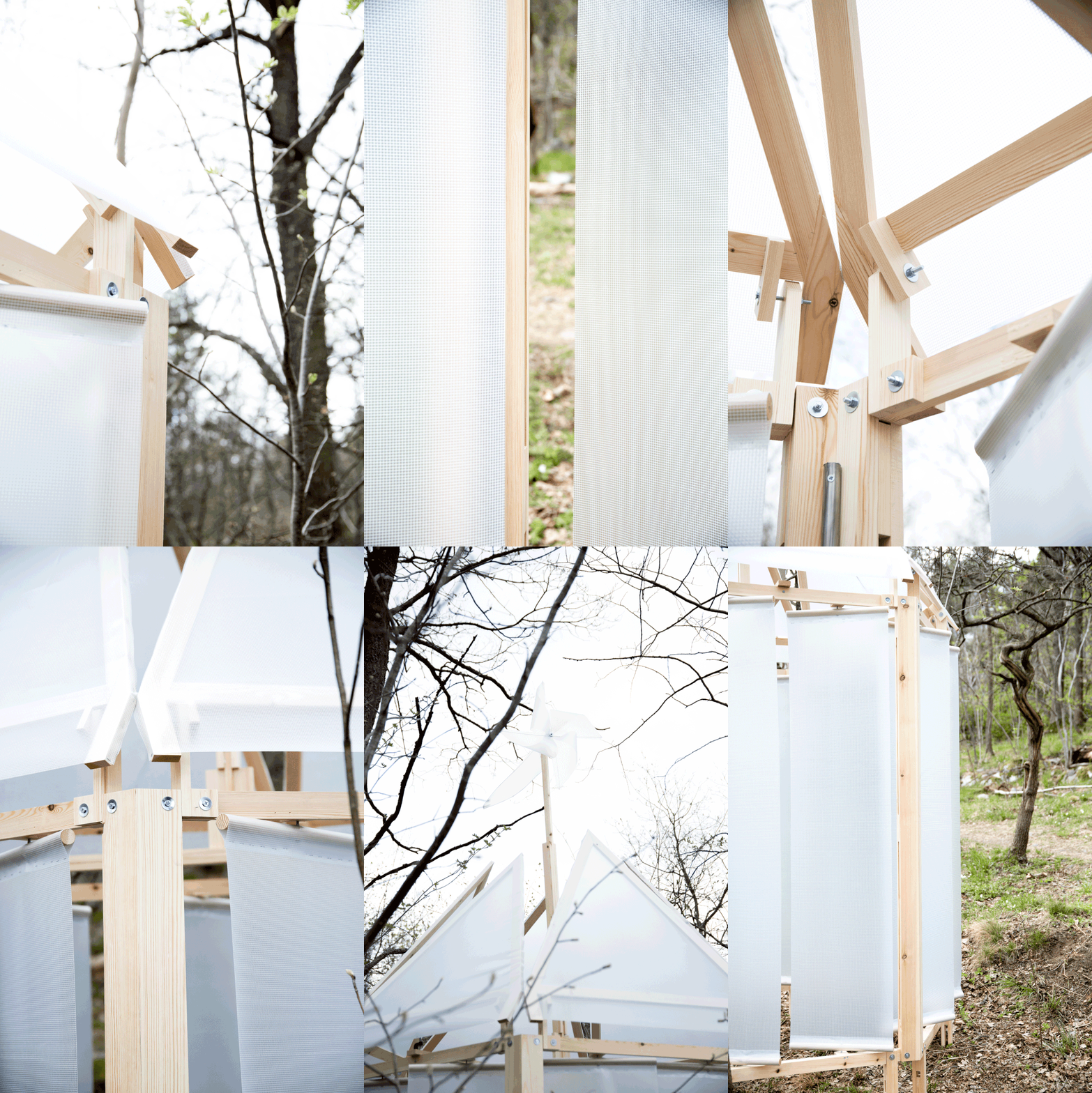
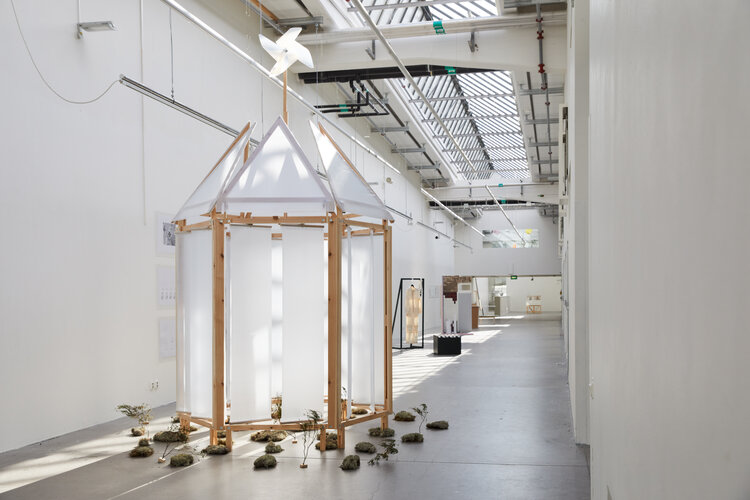
Constructing the New Nature emerges from this condition. The project unfolds in two parts. The first materializes climate change by constructing a structure that adapts to its surroundings, filtering excessive climatic phenomena produced by global warming. At its core lies an interior calibrated to the atmospheric qualities of pre-industrial nature—a portable micro-reserve, both illustration and refuge, evoking the only remaining “natural” condition conceivable today.
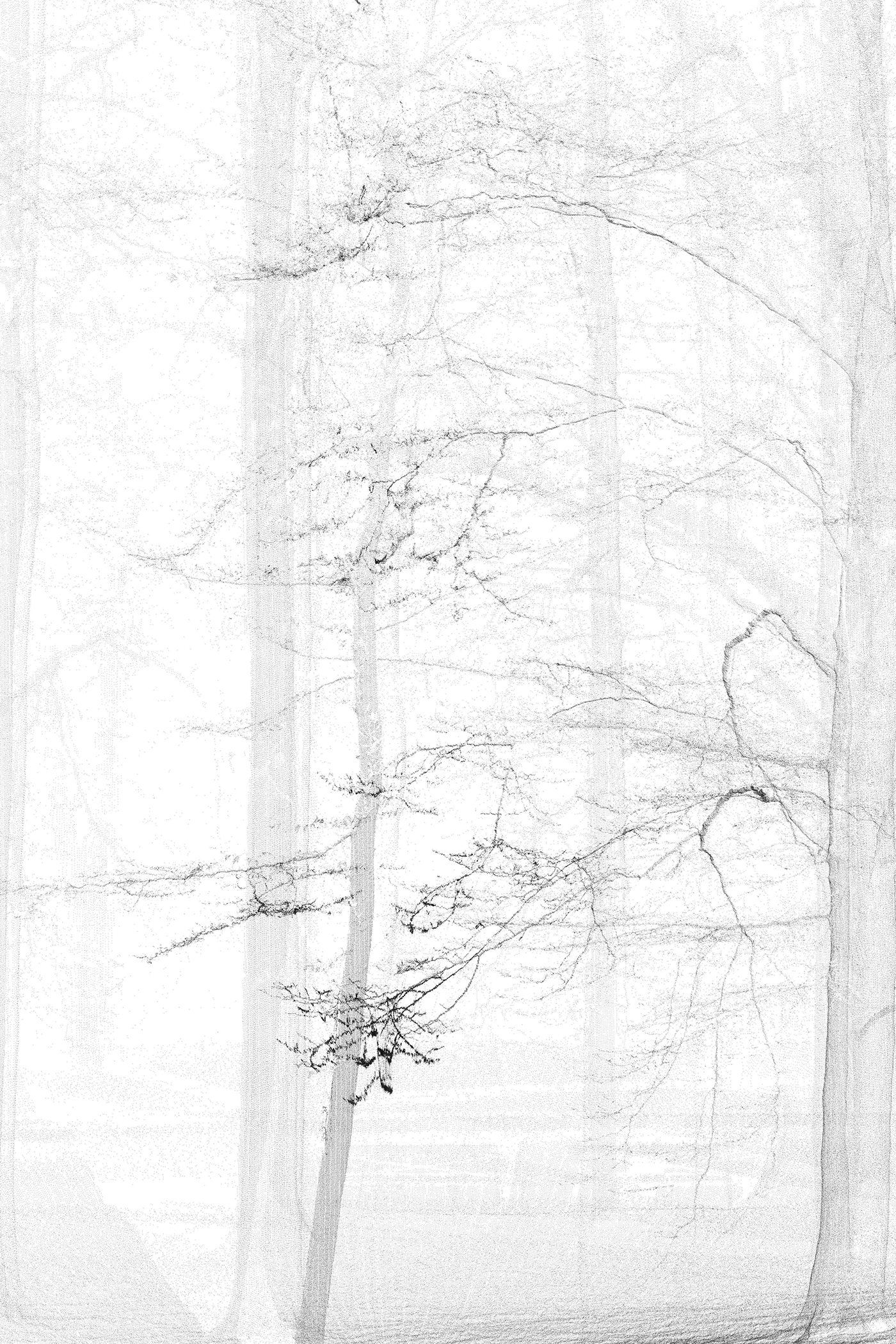
The second part examines the contemporary perception of nature as capital. Through 3D scanning, a forest is translated into architectural drawings—plans and sections traditionally reserved for human-made structures—thus exposing how the tools of architecture now serve to quantify and commodify the living world.