Fourth Nature
The landscape historian John Dixon Hunt describes three categories of nature: wilderness untouched by humans; cultivated landscapes of agriculture and urban settlement; and the aestheticized domains of gardens and parks. Yet in the Anthropocene—an era shaped by human dominance—wilderness has all but vanished. Since the domestication of plants and animals over 10,000 years ago, human intervention has expanded to encompass nearly all of the planet: 75% of ice-free land is now under human control, and 85% of forests have been cleared for use. The idea of “nature” as something separate from human influence no longer holds.
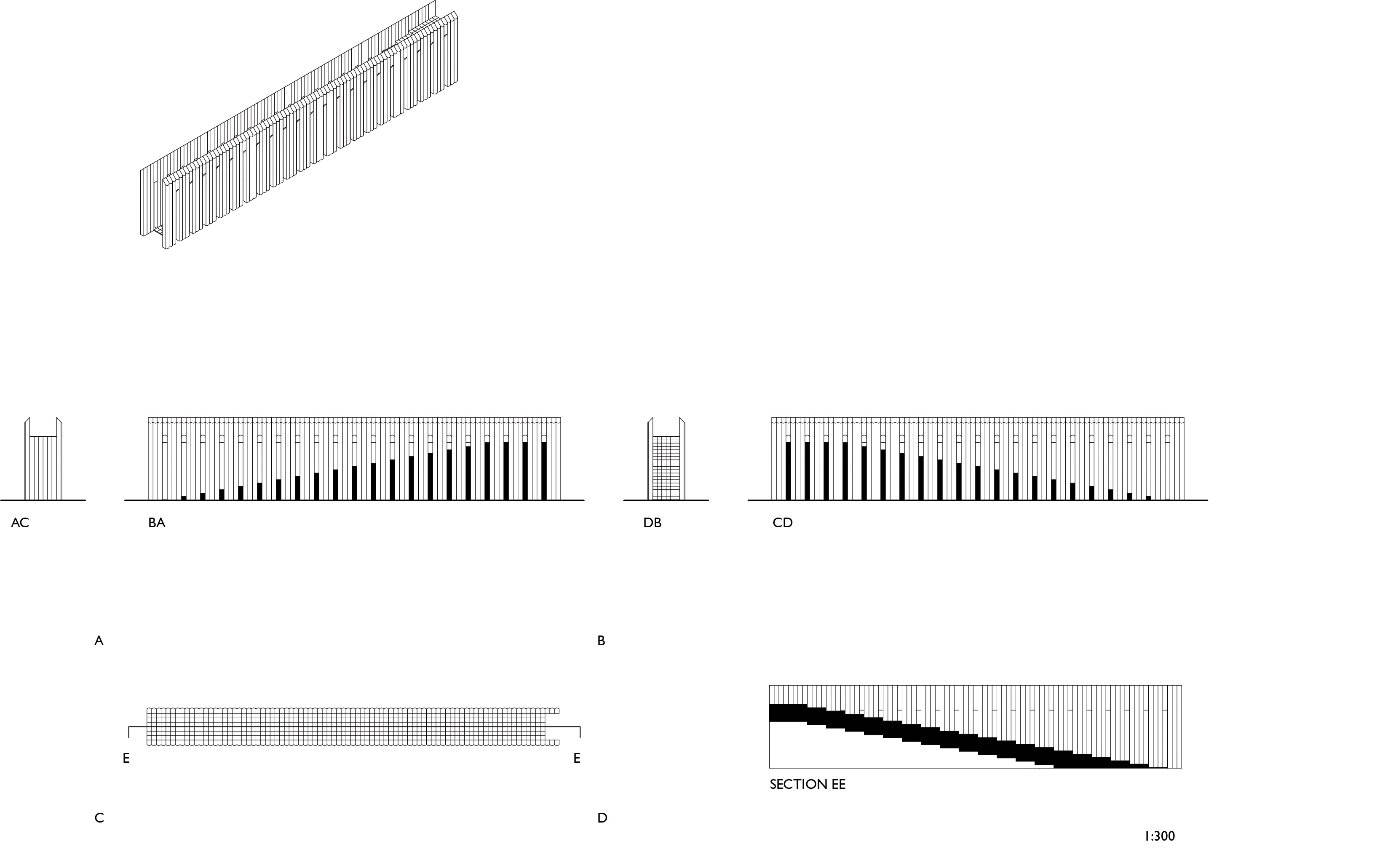
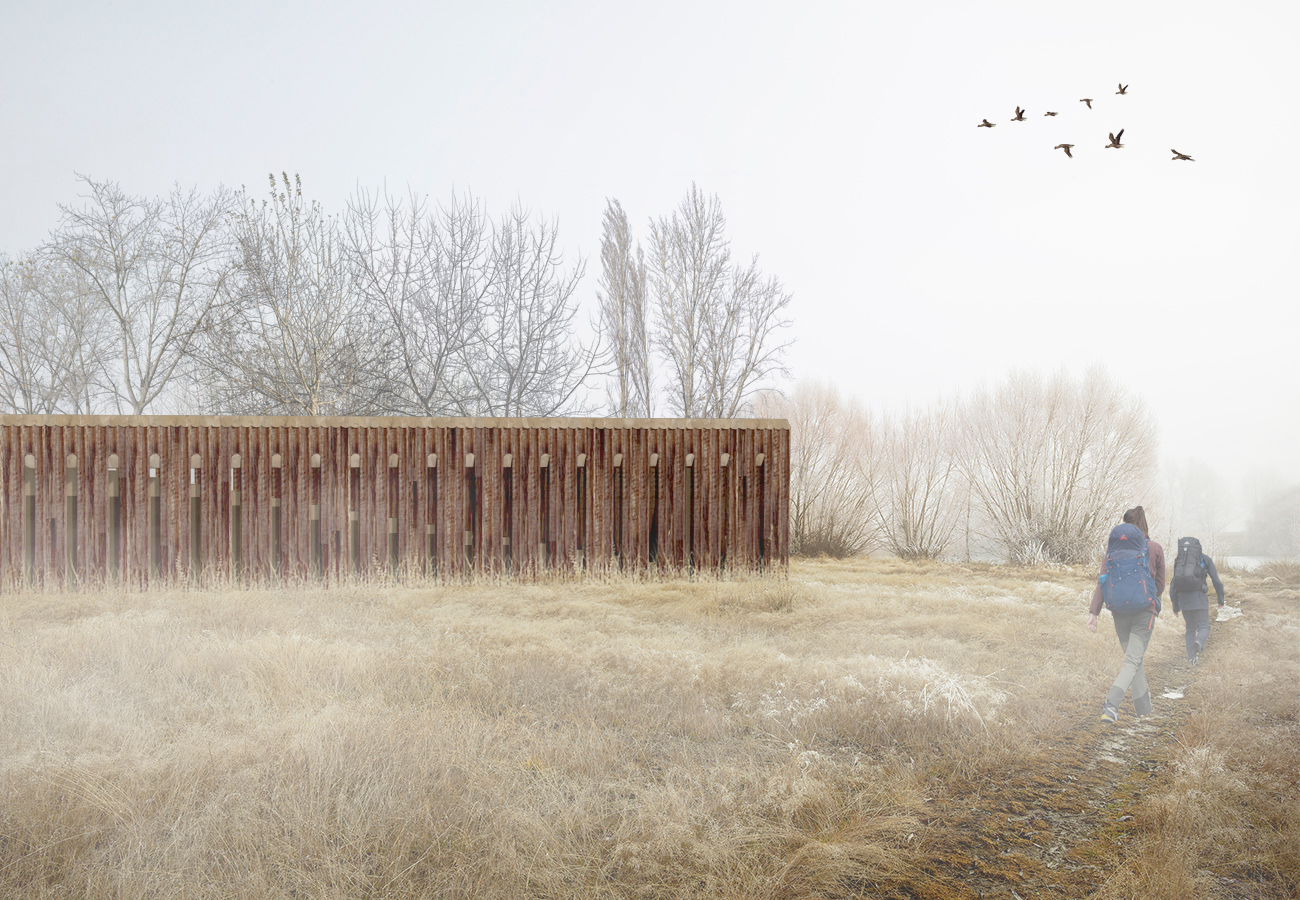
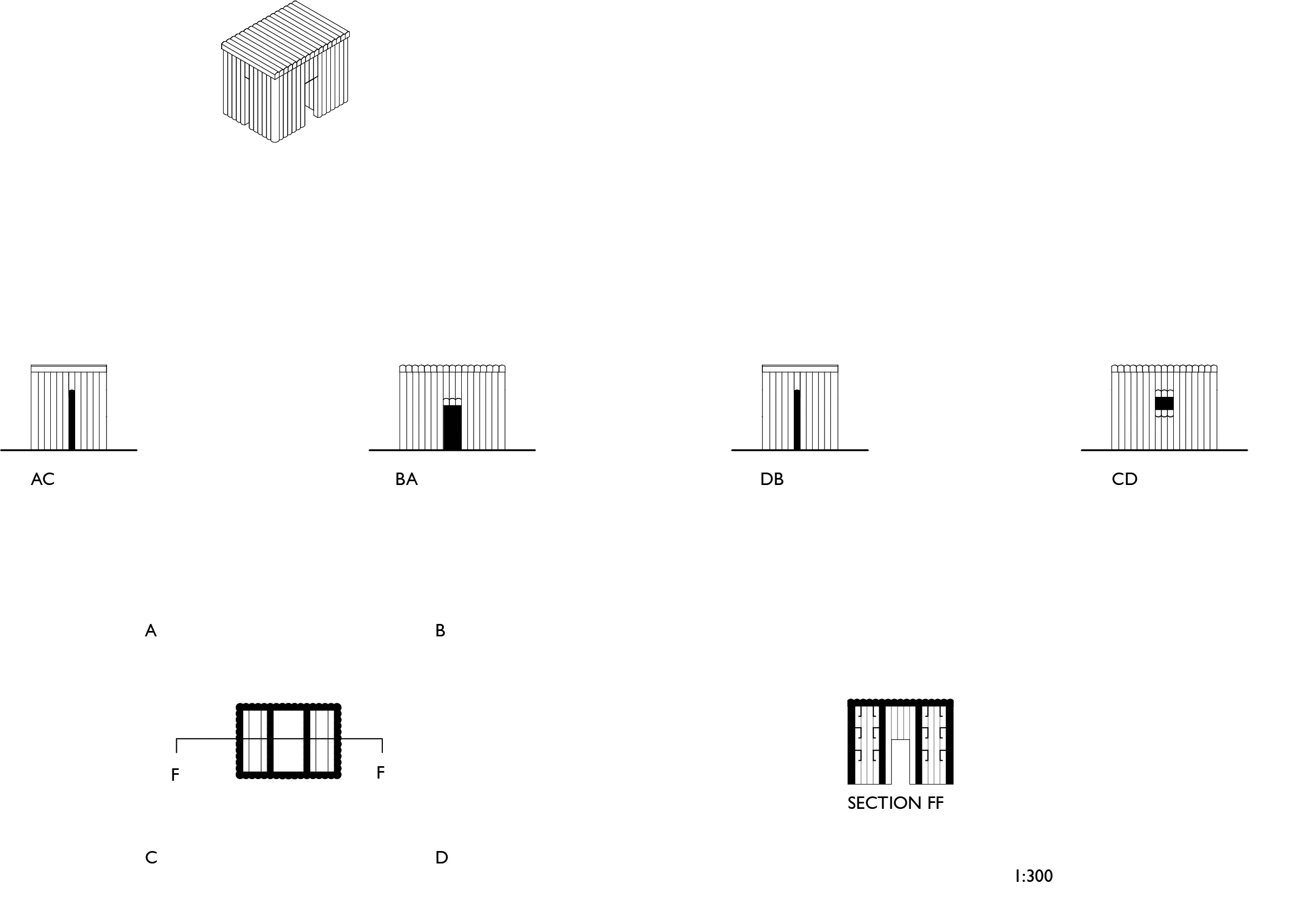
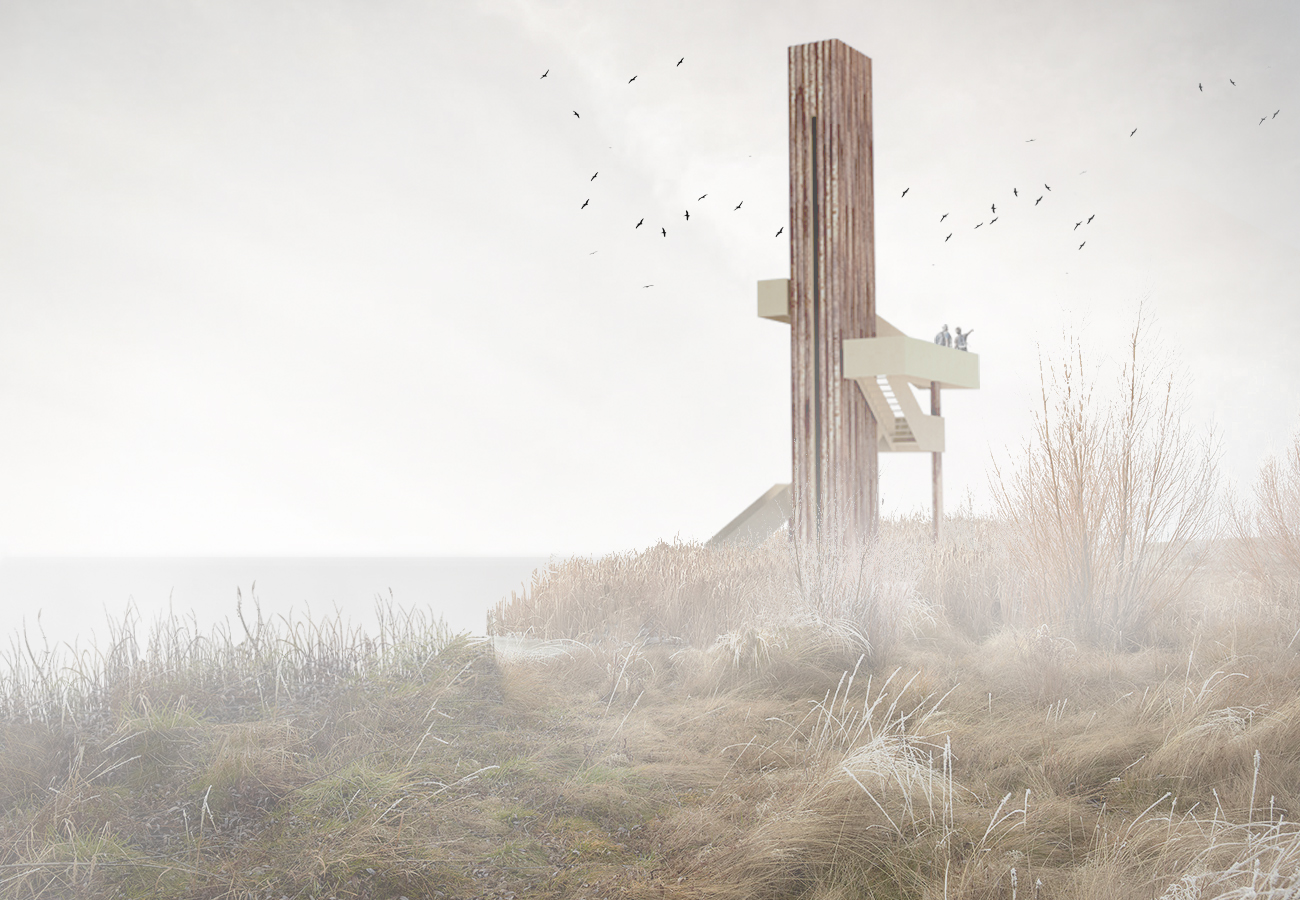
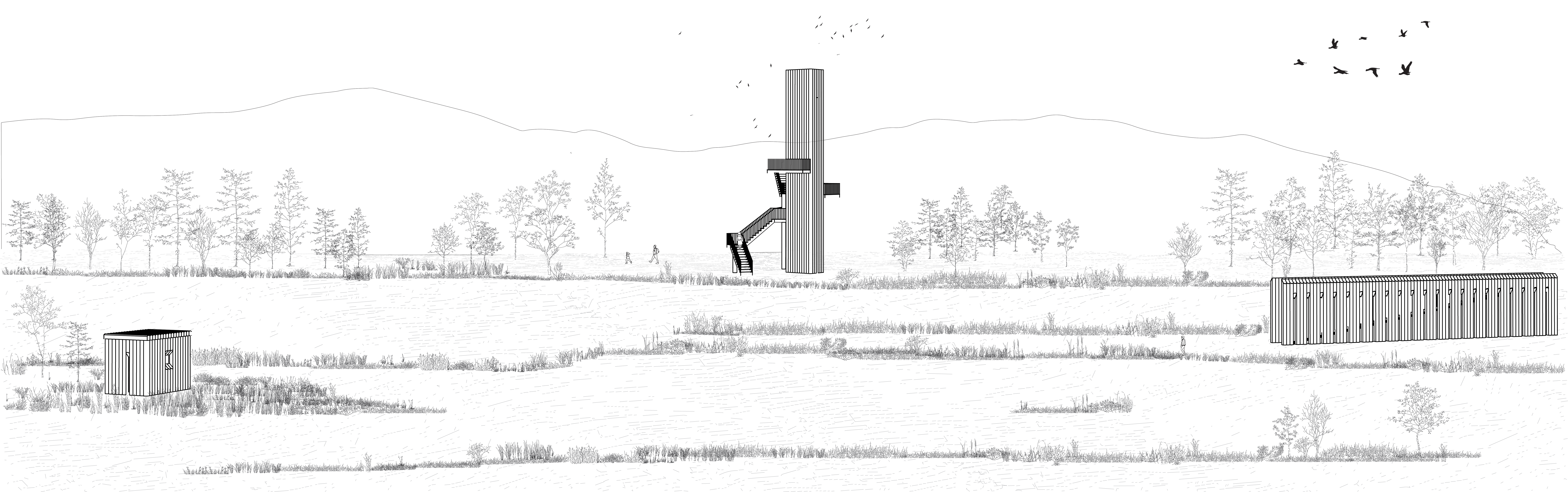
Fourth Nature proposes a new category—landscapes where wildlife reclaims spaces once exploited by industry. Torbiere del Sebino, a former peat mining site turned nature reserve, exemplifies this transformation: a territory where ecological succession redefines the boundary between the human and the wild. The project explores how architecture might participate in this reciprocity, strengthening biodiversity while inviting human presence without dominance.
Architecture, by its very act, both disrupts and remakes the world. Fourth Nature envisions this duality as productive—a shared ground between construction and regeneration, where architecture and ecology co-evolve to form a renewed, interdependent landscape.
![]()
![]()
![]()
![]()
![]()
![]()
The landscape historian John Dixon Hunt describes three categories of nature: wilderness untouched by humans; cultivated landscapes of agriculture and urban settlement; and the aestheticized domains of gardens and parks. Yet in the Anthropocene—an era shaped by human dominance—wilderness has all but vanished. Since the domestication of plants and animals over 10,000 years ago, human intervention has expanded to encompass nearly all of the planet: 75% of ice-free land is now under human control, and 85% of forests have been cleared for use. The idea of “nature” as something separate from human influence no longer holds.
Fourth Nature proposes a new category—landscapes where wildlife reclaims spaces once exploited by industry. Torbiere del Sebino, a former peat mining site turned nature reserve, exemplifies this transformation: a territory where ecological succession redefines the boundary between the human and the wild. The project explores how architecture might participate in this reciprocity, strengthening biodiversity while inviting human presence without dominance.
Architecture, by its very act, both disrupts and remakes the world. Fourth Nature envisions this duality as productive—a shared ground between construction and regeneration, where architecture and ecology co-evolve to form a renewed, interdependent landscape.